


Description
Solderless Strip-to-Wire Connector: The Easiest Way to Power and Extend Your LED Strips
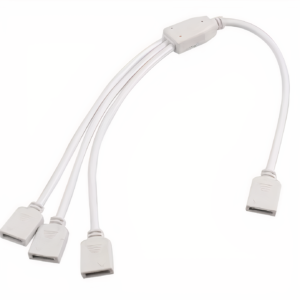
The Solderless Strip-to-Wire Connector is arguably the most indispensable accessory in any LED lighting toolkit. These connectors solve the fundamental challenge of how to get power to a cut piece of LED strip light. Each connector features a simple clasp that attaches to the end of your strip and a pre-attached “pigtail” of color-coded wires. This allows you to effortlessly connect your LED strip to a power supply, an LED controller, or run extension wire to another section of lighting. The Solderless Strip-to-Wire Connector eliminates the need for tedious and difficult soldering, making your projects faster, easier, and more reliable.
Why Use a Solderless Strip-to-Wire Connector?
These connectors are the go-to solution for professional installers and DIY enthusiasts alike for several key reasons:
- Simplicity and Speed: Create a secure wire lead in under 10 seconds. The intuitive clamp-down design is significantly faster and more accessible than soldering, especially for beginners.
- Flexibility in Installation: Easily run wires behind walls, under cabinets, or through furniture to connect your strips to a remotely located power source. This allows for cleaner, more professional installations where all wiring is hidden from view.
- Reliable Connections: The sharp pins inside the connector create a firm, positive connection with the copper pads on the LED strip, ensuring consistent power delivery without flickering.
- Enables Customization: Use these connectors to build custom-length fixtures, link multiple shelves to a single power supply, or create unique lighting designs that require jumping gaps.
How to Install and Use Your Connector
Connecting your Solderless Strip-to-Wire Connector is a quick and easy process.
- Cut the Strip: Make a clean cut on your LED strip along the designated copper cut line.
- Open the Connector: Lift the white clasp on the connector to open it.
- Insert the Strip: Carefully slide the end of the LED strip into the open connector. Ensure the strip slides underneath the internal metal contact pins.
- Align Polarity: Align the copper pads on the strip with the pins. Crucially, match the polarity markings on the strip (+, G, R, B) to the corresponding color of the wires on the pigtail. The red wire almost always aligns with the positive (+) pad.
- Secure the Clasp: Firmly snap the clasp shut. It will lock into place, piercing the contact pads and securing the strip.
- Connect Your Wires: You can now use the tinned ends of the pigtail wires to connect to your power supply, controller, or extension cable.
For any project, it is important to use the correct gauge of wire for the length of your run to avoid voltage drop. You can consult resources like this Wire Gauge and Voltage Drop Calculator to help you choose.
Applications and Project Ideas
The Solderless Strip-to-Wire Connector is a versatile tool for countless projects:
- Under-Cabinet Lighting: Connect multiple cabinet sections to a single, hidden power supply.
- Cove and Tray Ceilings: Easily run power up to your ceiling installation from a wall-mounted controller or power source.
- Retail and Display Lighting: Build custom-wired lighting for display cases and shelving units.
- Automotive and Marine: Create custom lighting accents by easily tapping into a 12V power source. (Note: For non-waterproof applications only).
Pair these connectors with any of our high-quality LED Strip Lights to start building your custom lighting solution today.
Frequently Asked Questions (FAQs)
Q: What do the different colored wires mean? A: The wires are color-coded to help you maintain correct polarity. Typically, Red is for Positive (+). On RGB strips, Green is for Green, Blue is for Blue, and the fourth wire (often Black) is the common anode (+12V). Always check the markings on your specific strip.
Q: Can I make the pigtail wires longer? A: Absolutely. The pigtail is designed to be connected to longer extension wires. You can use wire nuts, terminal blocks, or solder to connect the pigtail to a longer run of appropriately gauged wire.


Reviews
There are no reviews yet.